Park Outside Recall: Why Parked Cars Catch Fire
Some defects can start a fire in a car that is turned off and locked. When that risk is real, automakers tell owners to park outside. Here is what the warning means and how to handle it.
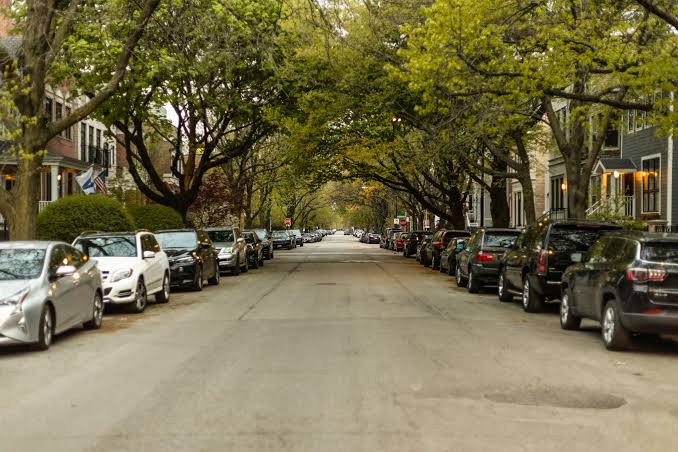
A park outside recall means the defect in your vehicle can start a fire even when the car is switched off, so you should not park it in a garage, carport, or close to a house or other building until the repair is done. In many of these recalls the car is still considered safe to drive. The danger is that a fire could start overnight, unattended, and spread to wherever the car is parked.
How a parked car catches fire
Turning off the ignition does not make a modern car electrically dead. Several systems stay powered all the time, or wake up periodically, so the car can unlock with a key fob, run its alarm, keep clock and radio memory, and talk to the manufacturer's app. Some modules are wired directly to the battery with constant power.
If one of those components has a defect that allows a short circuit, it can overheat with nobody around to notice. Common causes behind park outside recalls include:
- Fluid getting into electronics. A leak inside a sealed module, such as brake fluid in an anti-lock brake control unit, can create a short.
- Battery cell defects. In electric vehicles and hybrids, a manufacturing flaw inside a lithium-ion cell can lead to overheating and fire, sometimes while charging and sometimes while parked.
- Wiring and connectors. Chafed wires, poorly seated connectors and corroded terminals can heat up under constant load.
- Accessory circuits. Trailer hitch wiring, block heaters and other add-on circuits have been behind recalls of this type.
NHTSA marks these recalls with a "Park Outside" label on its VIN lookup, and the owner letter states the instruction directly.
Fires of this kind are rare relative to the number of cars on the road. But when one starts in a closed garage at night, it can spread to the house before anyone wakes up. That is why automakers and NHTSA attach the instruction to these recalls even when the odds for any single car are low.
Example: the Chevrolet Bolt EV battery recall
The highest-profile park outside case of recent years is the Chevrolet Bolt EV. After several fires in parked and charging cars, GM expanded its recall in 2021 to cover every 2017 through 2022 Bolt EV and the 2022 Bolt EUV. The cause traced back to two rare manufacturing defects in battery cells supplied by LG, a torn anode tab and a folded separator, which could occur together in the same cell.
Until the remedy was available, GM told owners to park outside and away from structures, not to charge the car overnight unattended, to limit charging to 90 percent, and to avoid running the battery down very low. The fix was replacement of battery modules, and in many cases the whole pack. Because the parts had to be built from scratch, it took months for most owners to get the repair.
Owners have filed 350 complaints with NHTSA about the 2017 Bolt EV, and our 2019 Bolt EV recall page shows six recalls for that model year alone. Not every one of those relates to the battery, but the record shows how much activity a single defect can create.
Example: Hyundai and Kia ABS module fires
Hyundai and Kia have issued a series of recalls involving the anti-lock brake system control module, sometimes called the hydraulic electronic control unit. On certain models, brake fluid could leak internally and cause an electrical short in the module, which has constant power. That short could lead to a fire in the engine compartment, whether the car was being driven or sitting parked.
The largest of these came in 2023, when the two companies recalled roughly 3.4 million vehicles across many models and model years from the 2010s and told owners to park outside until the remedy was done. The repair involved installing a different fuse for the module. Earlier recalls on the same general issue covered vehicles including some Kia Sportage and Hyundai Santa Fe models. Since the covered list is long and varied, the only reliable way to know if your car is included is a VIN check.
What to do if your car has a park outside recall
- Move the car outside today. Leave it in the open, ideally with some distance from the house, other cars and anything flammable.
- Do not park in enclosed garages at work, hotels or parking structures if you can avoid it. The concern is the same.
- Read the notice for other instructions. Some recalls add steps, such as not charging overnight or removing a specific fuse.
- Call a franchised dealer with your VIN and book the repair, or get on the parts waiting list.
- Watch for warning signs named in the letter, such as a burning smell, smoke, or a warning light like the ABS light staying on.
If the recall says the car can be driven, you can usually drive it to the dealer yourself. If it also carries a do not drive warning, read our explainer on do not drive recalls and arrange a tow.
Insurance and liability
The part of an auto policy that covers fire, theft and similar losses usually pays for fire damage to the car, and homeowners or renters policies typically cover damage to the structure. The details vary by policy and by state, so call your agent if you have questions. Following the park outside instruction is the cheapest insurance you can buy. If a fire does happen, report it to the manufacturer and to NHTSA. Fire reports from owners are one of the main ways new defects come to light. Our guide on reporting a safety problem explains how.
Frequently asked questions
Is it safe to drive a car with a park outside recall?
Often yes, but not always. Many park outside recalls do not restrict driving, while some also carry a do not drive warning. Read the recall summary for your VIN and follow the stricter instruction if you are unsure.
How long do I have to park outside?
Until the recall repair is completed and recorded. If parts are not yet available, that can mean weeks or months, so ask the dealer to put you on a waiting list.
Can I disconnect the battery instead of parking outside?
Do not improvise. Some recalls do tell owners to pull a specific fuse as an interim measure, but disconnecting the battery may not remove the risk for every defect, especially in electric vehicles. Follow the written instructions from the manufacturer.
Will the manufacturer pay for a rental while I wait?
It is not required by federal law. Some automakers have offered rentals or other help for park outside recalls with long waits, so ask both the dealer and the manufacturer's customer service line.