Transmission Slipping Signs and Repair Costs
Engine revs climb but the car does not speed up. That is the classic sign of a slipping transmission. Here is what to check, what repairs typically cost and when someone else might pay.
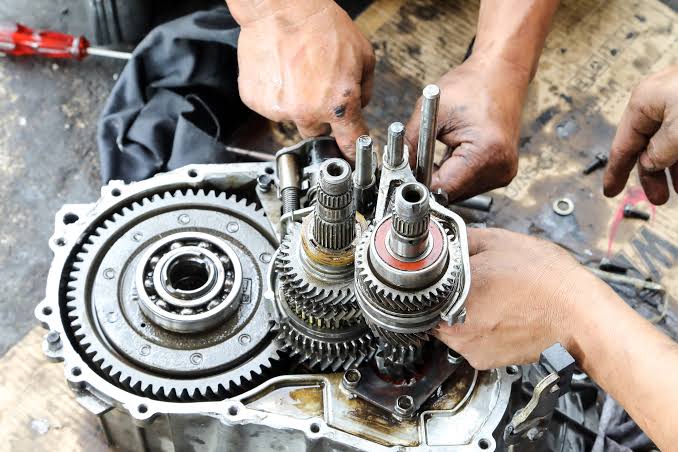
Transmission slipping is when the engine revs rise but the car does not accelerate to match, or when the transmission seems to drop out of gear briefly. Other signs include delayed engagement into Drive or Reverse, harsh or late shifts, a burning smell and a warning light. Low or degraded fluid is the easiest cause to check. Worn clutches, a failing torque converter, solenoid faults and software issues are also common. Repairs range from a fluid service to a replacement transmission that can cost several thousand dollars, so check for warranty or extended coverage before paying.
Signs your transmission is slipping
- RPM flare. The tachometer jumps during a shift or under load without a matching increase in speed.
- Delayed engagement. A pause of a second or more before the car moves after shifting into Drive or Reverse.
- Harsh, late or erratic shifts, including bangs into gear or shifts at odd speeds.
- Weak acceleration, as if the car is in a higher gear than it should be.
- Slipping out of gear or a sudden neutral feeling while driving.
- Burning smell, often from overheated fluid.
- Shudder at steady light throttle, often from the torque converter clutch.
- Warning lights. A check engine light, transmission temperature warning or "service transmission" message.
Some transmissions protect themselves by entering limp mode, holding one gear until the car is restarted. That is a sign to get it diagnosed, not to keep driving.
Check the fluid
If your car has a transmission dipstick, check the level according to the owner's manual. Many automatics are checked hot, with the engine running and the transmission in Park or Neutral on level ground. Some require a specific procedure.
| Fluid condition | What it suggests |
|---|---|
| Correct level, red or pink, clean smell | Fluid is probably not the cause |
| Low level | Leak somewhere; low fluid alone can cause slipping |
| Dark brown or black, burnt smell | Overheating and wear; internal damage is possible |
| Milky or pink and foamy | Possible coolant contamination, often from a failed cooler |
| Metal particles or debris | Internal wear; repair likely needed |
Many newer cars have no dipstick. The transmission is checked through a fill plug with the vehicle level and at a specific temperature, which is a job for a shop. Do not overfill, which causes its own problems.
A fluid change on a transmission that is already slipping badly is a gamble. Sometimes it helps. Sometimes old fluid was the only thing giving worn clutches enough grip. Ask the shop for its opinion based on the fluid condition.
Common causes
- Low fluid from a leak at a pan gasket, cooler line or seal
- Worn or burned clutch packs and bands
- Torque converter problems
- Faulty shift solenoids or valve body problems
- Software or adaptive learning issues, often fixable with an update or relearn
- Sensor faults, such as speed sensors, that confuse the transmission computer
- For dual-clutch and CVT designs, clutch wear and belt or pulley wear; see our guides to CVT problems and Ford PowerShift problems
What repairs typically cost
Costs vary by vehicle, transmission design, region and shop, so treat these as rough ballpark ranges, not quotes:
- Fluid and filter service: often a few hundred dollars, more for transmissions that require special procedures.
- Solenoid or sensor replacement: often a few hundred dollars to over a thousand, depending on access.
- Software update: sometimes free under warranty or a bulletin; otherwise usually a diagnostic labor charge.
- Rebuild: commonly a few thousand dollars, higher for complex or performance transmissions.
- Used transmission installed: can be cheaper than a rebuild, with more uncertainty about history.
- New or remanufactured transmission: often several thousand dollars, sometimes more than an older car is worth.
Get a written diagnosis that includes trouble codes, and get a second opinion before agreeing to a replacement.
When repairs might be covered
Powertrain warranty
The transmission is part of the powertrain, and factory powertrain warranties commonly run 5 years or 60,000 miles, with some brands offering longer coverage. Hyundai and Kia, for example, offer 10 years or 100,000 miles to the original owner, with shorter coverage for later owners. Check the warranty booklet and in-service date.
Warranty extensions
Automakers sometimes extend coverage for a specific transmission with known problems without a formal recall. Honda did this for some automatic transmissions in early-2000s models, and Ford and Nissan extended coverage on certain dual-clutch and CVT transmissions. Owners have filed 1,987 complaints with NHTSA about the 2003 Honda Accord, and the 2003 Accord transmission complaints reflect that era. Ask a dealer to run your VIN for any extended coverage.
Recalls
When a transmission problem creates a safety risk, such as loss of drive or a car that can roll away in Park, it may be recalled. Recall repairs are free. Check your model year's recalls page, and compare complaint patterns with the year's problem page. Owners have filed 3,770 complaints with NHTSA about the 2012 Ford Focus; see the 2012 Focus transmission complaints as an example of what a heavily reported transmission looks like in the data.
Lemon laws and goodwill
If a newer car has had repeated transmission repairs, your state's lemon law may apply. Our lemon law basics guide explains how. Outside warranty, a polite request for goodwill assistance, backed by maintenance records, sometimes gets part of the cost covered.
Manual transmissions slip too
On a manual car, slipping usually means a worn clutch. Engine revs climb when you accelerate hard in a higher gear, especially uphill, while road speed lags behind. Other signs include a clutch pedal that engages very high in its travel and a burning smell after heavy use. Clutch life depends heavily on driving style and traffic, so there is no standard mileage. A clutch replacement usually costs less than an automatic rebuild, but on many vehicles it is still a substantial labor job, and most modern hydraulic clutches cannot be adjusted to buy more time.
Driving with a slipping transmission
Do not push it. Slipping generates heat, and heat accelerates wear. If the car loses drive in traffic, you are in a dangerous spot. Limit driving to getting it to a shop, or have it towed if slipping is severe, warning lights are on or the fluid smells burnt.