What Is a VIN and How Do You Decode It?
Your vehicle identification number is a 17-character code that says who built the car, where, in what model year, and with what basic equipment. Here is how to read each section.
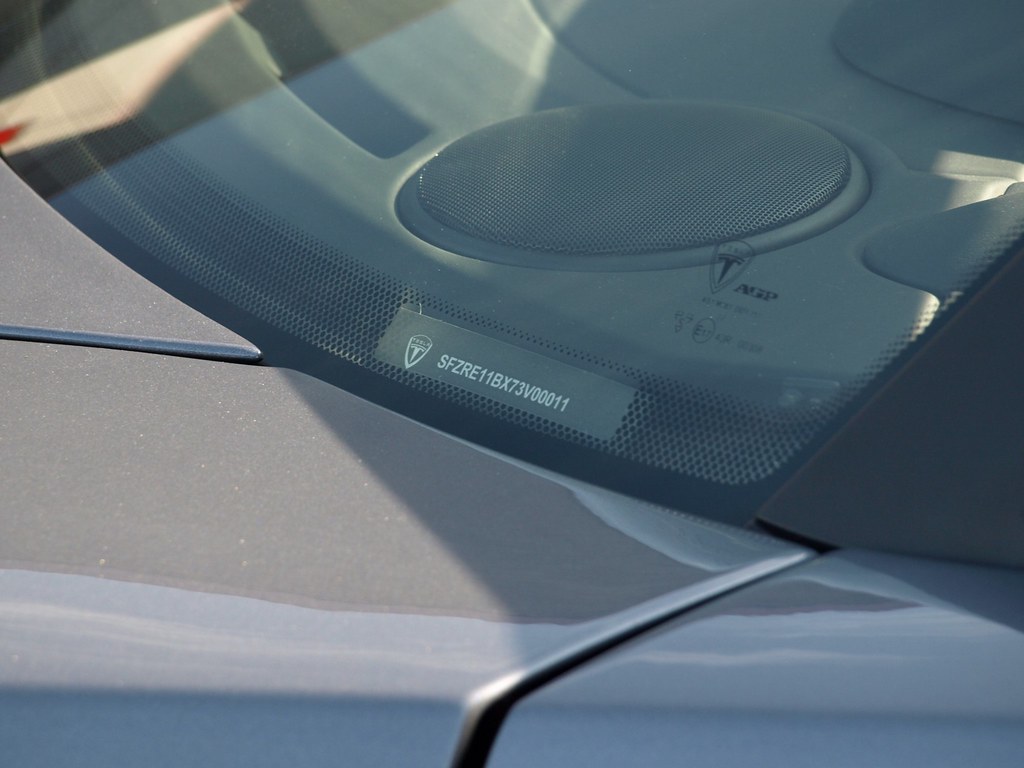
A VIN, or vehicle identification number, is a unique 17-character code assigned to every car, truck, SUV and motorcycle sold in the US since the 1981 model year. It identifies the manufacturer, the vehicle's basic specifications, the model year, the assembly plant and a serial number. You can decode much of it by hand once you know what each position means, and our free VIN decoder does the work for you.
Where to find your VIN
- On a metal plate at the base of the windshield on the driver's side, readable from outside.
- On a sticker on the driver's door jamb.
- On the title, registration and insurance documents.
- Often stamped on the engine, frame and other major parts as well.
All of these should match. If they do not, ask why before you buy.
The structure at a glance
A VIN is split into three sections, under a format set by NHTSA and based on international standards:
| Positions | Name | What it tells you |
|---|---|---|
| 1 to 3 | World Manufacturer Identifier (WMI) | Country or region, manufacturer and often vehicle type |
| 4 to 8 | Vehicle Descriptor Section (VDS) | Model, body style, engine, restraint system and similar attributes |
| 9 | Check digit | A calculated value used to catch errors |
| 10 | Model year | The vehicle's model year |
| 11 | Plant code | The assembly plant |
| 12 to 17 | Serial number | The production sequence number |
Positions 10 through 17 together are sometimes called the Vehicle Identifier Section.
VINs never use the letters I, O or Q, because they are too easy to confuse with 1 and 0.
Positions 1 to 3: World Manufacturer Identifier
The first character usually indicates where the vehicle was built, or more precisely the region of the manufacturer's assigned code. Some common examples:
- 1, 4 or 5: United States
- 2: Canada
- 3: Mexico
- J: Japan
- K: South Korea
- W: Germany
The second and third characters identify the manufacturer and sometimes the brand or vehicle type. For instance, VINs starting with 1HG belong to Honda vehicles built in the US. Manufacturers that build fewer than 1,000 vehicles a year use a 9 in position 3 and identify themselves further in positions 12 through 14.
Positions 4 to 8: Vehicle Descriptor Section
These five characters describe the vehicle. What each one means is up to the manufacturer, which files its coding scheme with NHTSA. Typically they encode the model line, body style, engine type, and restraint systems. For trucks they may include gross vehicle weight rating. Because the codes differ by brand and year, this is the section where a decoder saves the most time.
Position 9: Check digit
The ninth character is a number from 0 to 9, or the letter X. It is calculated from the other 16 characters using a fixed formula. If someone mistypes a VIN or alters it, the check digit usually will not match. Our article on the VIN check digit shows the full calculation with a worked example.
Position 10: Model year
The tenth character identifies the model year. The codes cycle every 30 years, which is why the same letter can mean two different years.
| Code | Year | Code | Year |
|---|---|---|---|
| Y | 2000 | F | 2015 |
| 1 | 2001 | G | 2016 |
| 2 | 2002 | H | 2017 |
| 3 | 2003 | J | 2018 |
| 4 | 2004 | K | 2019 |
| 5 | 2005 | L | 2020 |
| 6 | 2006 | M | 2021 |
| 7 | 2007 | N | 2022 |
| 8 | 2008 | P | 2023 |
| 9 | 2009 | R | 2024 |
| A | 2010 | S | 2025 |
| B | 2011 | T | 2026 |
| C | 2012 | V | 2027 |
| D | 2013 | W | 2028 |
| E | 2014 | X | 2029 |
The letters U and Z and the digit 0 are not used for model year. Going back further, L was 1990, M was 1991, and so on through X for 1999, which means an "A" could be 1980 or 2010. For cars, SUVs and light trucks, position 7 resolves this: if it is a number, the year is in the 1980 to 2009 cycle, and if it is a letter, the year falls in the 2010 to 2039 cycle. In practice the car in front of you usually makes it obvious.
Keep in mind that model year and build date are different things. A 2024 model can be built in 2023.
Position 11: Plant code
The eleventh character identifies the factory where the vehicle was assembled. Each manufacturer assigns its own plant codes, so a "U" means something different for Ford than for Toyota. The plant matters more than you might think: recalls are sometimes limited to vehicles built at one factory during a certain date range.
Positions 12 to 17: Serial number
The last six characters are the production sequence number. Combined with the rest of the VIN, they make the code unique to one vehicle. Recalls often refer to VIN ranges, and the serial number is what places your car inside or outside a range.
A quick example
Take the commonly used sample VIN 1HGCM82633A004352. The 1HG means a Honda built in the US. The CM826 section describes the model and configuration, which Honda's coding identifies as an Accord. The 3 in position 9 is the check digit. The 3 in position 10 means the 2003 model year (position 7 is a number, so it is the earlier cycle). The A is the plant code, and 004352 is the serial number. You could then look up the 2003 Honda Accord to see its recalls, complaints and fuel economy.
What a VIN can and cannot tell you
A VIN tells you how the car left the factory. It does not tell you its accident history, mileage, title status, or what has been changed since. For recalls, the VIN is the key: NHTSA's lookup uses it to show whether any safety recall is open on that specific car. See our guide on how to check car recalls by VIN.
Using the VIN when shopping
When you look at a used car, read the VIN off the dashboard plate yourself and photograph the door jamb label. Compare both with the title. Then decode it and check that the model year, engine and body style match the listing. Sellers sometimes advertise a car as a higher trim or a later year, and the VIN is the quickest way to catch it. Finally, use the same VIN for your recall check and any vehicle history report, so all of your research refers to the same car.
Frequently asked questions
Do older cars have 17-character VINs?
Vehicles built before the 1981 model year used shorter, non-standard VINs that varied by manufacturer. The 17-character format has been required since then.
Can two vehicles have the same VIN?
Legitimately, no. The system is designed so each VIN is unique for at least 30 years. A duplicate is a strong sign of fraud or a cloned VIN.
Why does my VIN decoder show the wrong engine or trim?
Positions 4 through 8 do not always capture every option, and some decoders guess. Trim packages in particular are often not encoded. Check the window sticker or build sheet if you need certainty.
Is it safe to share my VIN?
Generally, yes. It is visible through the windshield of every parked car. A VIN alone does not reveal your name or address to the public.