Hybrid vs Gas: Does a Hybrid Pay for Itself?
A hybrid pays for itself when the fuel savings cover its extra purchase price within the years you own it. Here is the payback math, who benefits most, and what to know about battery life and warranties.
A hybrid pays for itself when the money you save on fuel exceeds the extra you paid for it, within the time you keep the car. Divide the price premium by your yearly fuel savings to get the payback period in years. For a typical driver covering 12,000 to 15,000 miles a year, with a hybrid premium of a couple of thousand dollars, payback often lands somewhere between three and seven years. Drivers who do a lot of city miles get there faster. Drivers who mostly cruise on the highway may never get there on fuel alone.
The payback formula
- Find the price difference between the hybrid and the comparable gas version, after any discounts or incentives.
- Work out the yearly fuel cost of each: (annual miles ÷ MPG) × fuel price.
- Subtract to get the yearly savings.
- Divide the price difference by the yearly savings.
Our guide on calculating annual fuel cost explains step 2 in more detail.
Worked example: average driver
These numbers are illustrative, not a specific car. Suppose a compact SUV is rated 30 mpg combined as a gas model and 40 mpg as a hybrid, the hybrid costs $2,500 more, and you drive 15,000 miles a year with gas at $3.50.
| Gas model | Hybrid | |
|---|---|---|
| Combined MPG | 30 | 40 |
| Gallons per year | 500 | 375 |
| Fuel cost per year | $1,750 | $1,313 |
| Yearly savings | $437 | |
| Payback on $2,500 | About 5.7 years |
At $4.50 gas, the yearly savings rise to about $562 and payback drops to about 4.4 years. At 10,000 miles a year and $3.50, savings fall to about $292 and payback stretches to more than 8 years.
Worked example: city driver
Hybrids shine in stop-and-go traffic, where regenerative braking recovers energy and the engine can shut off at low speed. Gas cars do their worst there. Suppose the same driver covers 12,000 miles a year, mostly in town, and actually gets 26 mpg in the gas model and 42 mpg in the hybrid. That is 462 gallons against 286, a saving of about 176 gallons, or roughly $615 a year at $3.50. Payback on $2,500 is about four years.
Real numbers to compare
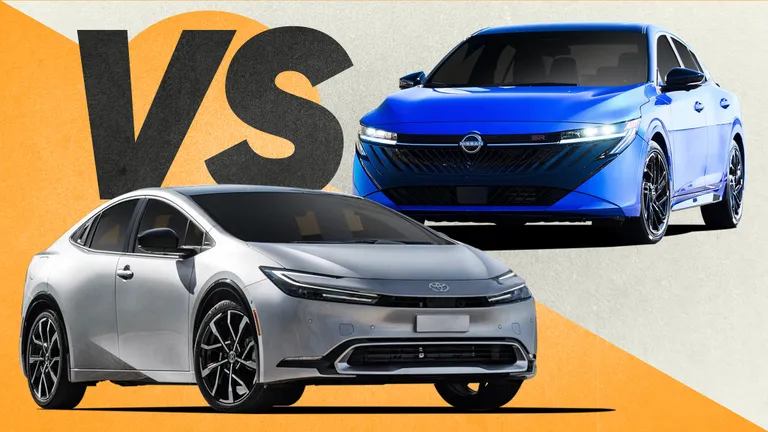
Look at real ratings for the models you are considering rather than generic figures. For reference, the 2022 Toyota Camry Hybrid is shown at 49 mpg combined on our pages, and the 2024 Toyota Prius at 57 mpg. Compare each hybrid with the gas version of the same model and similar trim, not with a different class of car. Also keep in mind that the gap you see in daily driving may differ from the label, for the reasons covered in EPA MPG vs real-world MPG. Hybrids in particular tend to lose more efficiency in cold weather and at sustained high speeds.
Not all hybrids are alike
- Full hybrids can drive short distances at low speed on electric power alone and deliver the biggest fuel savings in city driving. Most of the popular hybrid sedans and SUVs fall in this group.
- Mild hybrids use a small electric motor to assist the engine and allow smoother start-stop operation. They save less fuel, but the price premium is usually smaller too.
- Plug-in hybrids have a larger battery you charge from the grid, giving a useful electric-only range before the engine starts. Their savings depend almost entirely on how often you plug in.
Make sure you know which type you are pricing, and compare each against the gas version of the same model.
Which driving patterns favor a hybrid
- Lots of city and suburban miles. This is where the hybrid advantage is largest.
- High annual mileage. More miles means more fuel saved each year and a faster payback.
- Keeping the car a long time. The longer you own it, the more of the savings you collect.
- Rideshare, delivery or work driving. High mileage and lots of stops make hybrids a common choice for this work.
A hybrid makes less financial sense if you drive few miles, mostly at steady highway speeds, or trade cars every two or three years.
Battery longevity
Hybrid batteries have proven durable. Many hybrids reach well over 150,000 miles on the original pack, though life depends on the design, climate and use. When a pack does need replacing, the cost varies widely by model and by the choice of a new, remanufactured or used unit. Get a quote for the specific model if you are buying an older hybrid.
Warranties
Federal rules require manufacturers to warrant major emission control components for 8 years or 80,000 miles, and hybrid batteries are generally covered for at least that long. Many automakers go further, commonly 8 years or 100,000 miles. In California and the states that follow its emissions rules, hybrid batteries on some vehicles certified to stricter standards are covered for 10 years or 150,000 miles. Toyota, for example, extended its hybrid battery coverage to 10 years or 150,000 miles starting with the 2020 model year. Terms differ by brand, model year and state, and some coverage applies only to the original owner, so read the warranty booklet for the exact vehicle.
Other costs and savings
- Brakes. Regenerative braking does much of the work, so brake pads and rotors often last longer.
- Insurance. Premiums can be a little higher for a hybrid than for the gas version, depending on the insurer and the repair costs.
- Maintenance. Routine service is broadly similar. Some hybrids have extra coolant loops or a battery cooling fan filter to keep clean.
- Resale. Hybrids have often held their value well, especially when fuel prices are high. Resale depends on the market at the time you sell, so treat it as a possible bonus, not a certainty.
The bottom line
Run the numbers with your own miles, your real fuel price and the actual price difference on the cars you are looking at. If payback falls inside the time you expect to keep the car, the hybrid is the better financial choice. If it falls well outside, the gas model may be the smarter buy, unless you value the quieter drive, fewer fill-ups and lower emissions enough to pay for them.
Frequently asked questions
Do hybrids need special maintenance?
Not much. Oil changes, filters, tires and fluids follow a normal schedule. Some models have an inverter coolant loop or a battery cooling air filter that needs periodic attention. The owner's manual lists them.
Is a used hybrid a risk because of the battery?
Less than many people assume, but check how much warranty remains and ask a hybrid-experienced shop to test the battery's health during a pre-purchase inspection.
Are plug-in hybrids better value than regular hybrids?
Only if you charge regularly and most of your trips fit within the electric range. Otherwise you are carrying a bigger, more expensive battery and running mostly on gas.