Tire Pressure and Fuel Economy: What You Lose When Tires Run Low
Underinflated tires cost fuel, wear out faster and handle worse. Here is how much mileage low pressure costs, where to find the right number, how to check it properly, and what TPMS does and does not tell you.
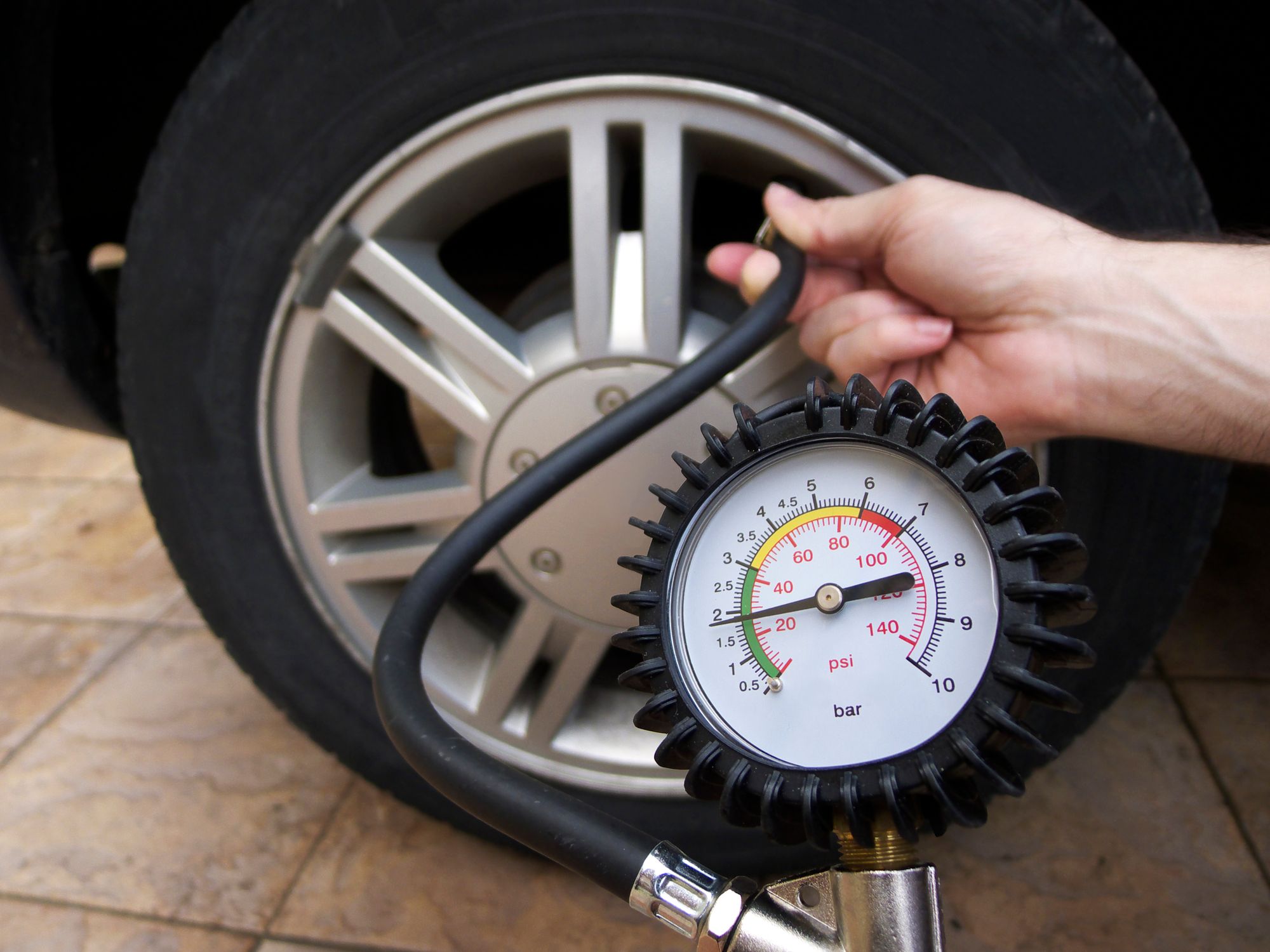
Underinflated tires lower your fuel economy because a soft tire flexes more and has more rolling resistance. According to the government's fueleconomy.gov tips, keeping tires at the correct pressure can improve gas mileage by about 0.6 percent on average and by up to 3 percent in some cases, and mileage drops by roughly 0.2 percent for every 1 psi drop in the average pressure of all four tires. The fuel savings are modest. The bigger reasons to keep tires inflated correctly are safety, handling and tire life.
Why low pressure costs fuel
A tire is constantly flexing as it rolls, and that flexing turns energy into heat. When pressure is low, the sidewalls and tread flex more, the contact patch gets larger, and rolling resistance rises. The engine has to work harder to keep the car moving at the same speed. The effect builds slowly, because tires lose air gradually, often around a pound per square inch a month even with no leak, which is why many drivers never notice it.
Low pressure is one of several reasons real-world mileage often falls short of the window sticker. We cover the others in EPA MPG vs real-world MPG.
Safety and wear matter more
A few percent of fuel economy adds up to a modest sum over a year. The other effects of underinflation are more serious:
- Heat buildup. An underinflated tire runs hotter, especially at highway speed with a full load. Heat is a leading cause of tire failure.
- Longer stopping distances and weaker handling, particularly in emergency maneuvers and on wet roads.
- Faster, uneven wear. Low pressure wears the outer edges of the tread. Overinflation wears the center.
- More risk of damage from potholes and curbs.
Where to find the right pressure
Use the pressure listed by the vehicle manufacturer, not the number molded into the tire sidewall. The sidewall figure is the maximum pressure the tire can hold, not the right pressure for your car.
The correct figure is on the tire placard, a label usually found on the driver's door jamb. Some vehicles put it inside the fuel door or the glove box. The owner's manual lists it too. Front and rear pressures are sometimes different, and some placards give a separate figure for a full load. The compact spare often needs a much higher pressure than the road tires, and the placard lists that as well.
If you have fitted a different tire size from the original, ask the tire shop for the right pressure for that size on your vehicle.
How to check tire pressure correctly
- Check when the tires are cold. That means the car has been parked for at least a few hours, or driven only a mile or so. Driving warms the tires and raises the reading, so a warm reading will look higher than it really is.
- Use a good gauge. A digital or quality dial gauge is inexpensive and more consistent than many gas-station air hoses.
- Remove the valve cap and press the gauge firmly onto the valve stem until the hissing stops.
- Compare with the placard and add air as needed. If you overfill, press the pin in the valve briefly to let some out, then measure again.
- Check all four, plus the spare if you have one.
- Replace the valve caps. They keep dirt and moisture out of the valve.
Do this at least once a month and before a long trip. Never let air out of hot tires to bring them down to the placard number. The pressure will fall too low once they cool.
Temperature changes the reading
Air pressure in a tire drops as the temperature falls, roughly 1 psi for every 10°F. A tire set correctly on a warm autumn afternoon can be several psi low on the first cold morning. That is why tire pressure warning lights often come on at the start of winter. Check pressure more often when the seasons change. Electric vehicle owners feel this twice in winter, since lower pressure adds to the range loss covered in EV range in cold weather.
What TPMS does and does not do
Tire pressure monitoring systems became required on new cars and light trucks sold in the US starting with the 2008 model year. The rule calls for a warning when one or more tires is significantly underinflated, at least 25 percent below the recommended cold pressure. For a tire that should be at 35 psi, the light may not come on until it is near 26 psi.
That means TPMS is a warning of a serious problem, not a maintenance tool. By the time the light comes on, you have already been driving with low pressure. Keep checking manually.
There are two kinds of system:
- Direct TPMS uses a sensor in each wheel that reports actual pressure. Many cars can show each tire's pressure on the dash. Sensors run on batteries that eventually wear out, often after several years.
- Indirect TPMS uses the wheel speed sensors of the anti-lock brakes to detect a tire that is turning faster than the others because it is smaller from low pressure. It usually needs a reset after you adjust pressure or rotate tires.
A flashing TPMS light that then stays on usually points to a fault in the system itself, such as a dead sensor, rather than low pressure. Have it checked.
Overinflating is not the answer
Some drivers add extra air in the hope of better mileage. Overinflated tires do roll a little more easily, but they also shrink the contact patch, which reduces grip, especially in the wet, and makes braking distances longer. The ride gets harsher, the center of the tread wears faster, and the tire is more vulnerable to damage from potholes. Stick to the placard pressure. If you regularly carry heavy loads or tow, see if your placard or owner's manual lists a higher pressure for those conditions.
Other tire choices that affect mileage
- Low rolling resistance tires are fitted to many fuel-efficient cars at the factory. Replacing them with a different type can lower mileage.
- Larger wheels and wider tires often add weight and rolling resistance.
- Alignment. A car that is out of alignment drags its tires slightly, wasting fuel and wearing the tread.
Tire rotation and alignment are covered in our car maintenance schedule basics. If you are not sure about any tire on your car, check for tire or wheel recalls by VIN through NHTSA, and find more tips on fueleconomy.gov.